


Signs and symptoms of white line disease
It’s important for you to check your horse’s hooves regularly as early signs can be subtle. The first thing you might notice is a widening of the white line, which looks crumbly, powdery or waxy. If you tap the hoof wall over the affected area, it often produces a hollow sound. Cavities may fill with grey or white crumbly material, usually starting at the toe but sometimes at the quarters or heels.
As the separation moves upward, you might see flaring of the hoof wall, a concave ‘dished’ appearance or recurring abscesses. Most horses remain sound in the early stages, but lameness can occur when the damage compromises internal support or the coffin bone rotates1.
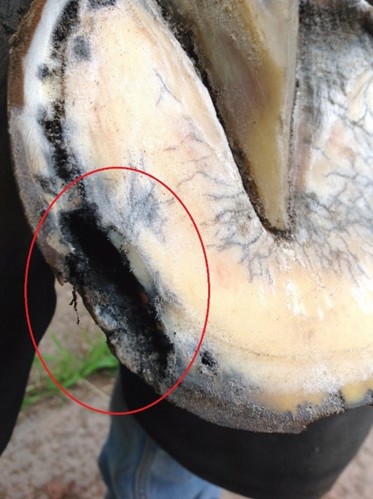
The highlighted area shows a large cavity caused by separation at the white line.
Photo credit: Nigel Brown AWCF
Causes
The exact cause of white line disease isn’t fully understood, but several factors can contribute1. Mechanical stress from long toes, dropped heels or poor hoof balance can pry the wall away from the sole. Once separation occurs, bacteria and fungi thrive in the area and break down hoof tissue.
Environmental conditions also play a role — very wet conditions soften the hoof, while extreme dryness can cause cracks2. Nutrition matters too; low levels of biotin, zinc, copper or too much iron, can weaken hoof structure2.
Treatment
If you suspect white line disease, call your farrier or vet promptly. Treatment usually involves removing the damaged section of the hoof wall to expose the infection to air, as oxygen helps kill harmful microbes. Gentle topical agents like iodine, chlorine dioxide or antifungal gels are applied daily until healthy tissue returns.
Special shoes such as heart-bar or bar shoes can help redistribute weight and stabilise the hoof. Keeping bedding clean and dry and avoiding turnout in wet or muddy areas is essential. Recovery can take time, especially if the disease reaches the coronary band, but most uncomplicated cases respond well with consistent care.
Prevention
While white line disease can be tricky to prevent completely, there are ways to reduce the risk:
- Keep up with a regular farrier cycle as advised to maintain hoof balance and prevent long toes
- Pick out hooves daily to remove trapped debris
- Provide a balanced diet to support strong hoof growth
- Make sure your horse has a dry standing area and avoid prolonged exposure to wet or muddy conditions.
References
- Brian Beasley & Angel Abuelo (2024) White Line Disease in Horses — Musculoskeletal System — MSD Veterinary Manual
- Pritchard, L., & King, A. (2015). White line disease in horses. Veterinary Times, 45(31), 12–14.