


Signs and symptoms of a bruised sole
Signs of a bruised sole can vary, but you may notice your horse moving with a shortened stride or being uncomfortable on hard ground, showing mild to severe lameness.
The affected hoof often feels warmer than usual, and you might detect a stronger digital pulse near the fetlock. Sometimes, red, purple or yellow areas appear on the sole, which are easier to see on white hooves but can occur on dark ones too. Your horse may react when pressure is applied with hoof testers and they might be hesitant to walk on hard or rocky surfaces, preferring to stand still or shift weight to relieve discomfort.
In severe cases, bruises can sometimes develop into abscesses if bacteria enter the site, leading to severe lameness2.
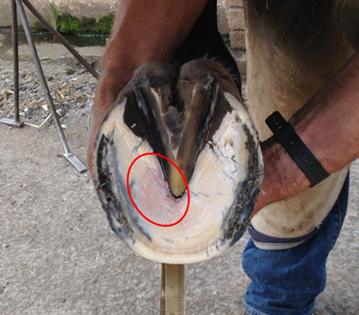
The highlighted area shows a bruised sole. Photo credit: Nigel Brown AWCF
Causes
Bruising can happen for several reasons. Common causes include trauma from stepping on sharp stones, frozen ground or other hard objects and concussion from repetitive work on hard surfaces like roads or frozen fields. Poor hoof care, such as shoes that are too small or left on too long or excessive paring of the sole during trimming, can also increase risk. Horses with short heels and long toes are also at higher risk, and laminitis can lead to bruising2.
Environmental factors including frequent wet and dry cycles can also weaken the hoof wall and soften the sole, making it more vulnerable to injury.
Treatment
If you think your horse may have a bruised sole, contact your farrier for advice. Treatment focuses on reducing pain and allowing the hoof to heal. Rest is vital, so reduce exercise and keep your horse on a soft, deeply bedded surface.
Cold hosing for short periods can help to reduce inflammation. Your farrier may remove the shoe or carefully pare the area around the bruise to relieve pressure. Protective measures such as hoof boots, pads or a bandage can help if the sole is thin or damaged.
Uncomplicated bruises usually resolve within two weeks2. Monitor progress daily and seek veterinary advice if symptoms continue or worsen. If a haematoma (severe bruise) or abscess develops, drainage and a hoof poultice may be required2.
In cases where your horse is lame, has a very large bruise or isn’t showing improvement, contact your vet as pain relief and X-rays may be needed to rule out pedal bone fractures in severe cases2.
Prevention
Keeping up with a regular trimming and shoeing schedule with a registered farrier helps maintain good hoof health and balance. Try to avoid working excessively on hard, stony or frozen ground, especially if your horse has thinner soles. Consider using pads or hoof boots for extra protection when riding over rough terrain, but they should only be used under the guidance of your farrier or vet2.
A balanced diet plays a big role in supporting strong, healthy hoof growth, so make sure nutrition is right. It’s also a good habit to pick out hooves before and after exercise to remove any stones and check for loose shoes.
Finally, keeping your horse’s stable or housing clean and dry is essential for strong, healthy hooves. If your horse spends time turned out, make sure they have access to a dry area to stand on for part of the day. Managing paddocks by harrowing and rolling can help reduce uneven ground and remove large stones2.