


What are hoof cracks?
Hoof cracks are splits or breaks in the hoof wall. They can run vertically (up and down) or horizontally (side to side). Some cracks are shallow and only affect the outer layer, while others go deep and can cause pain or infection.
Common types include:
- Grass cracks, which start at the bottom and are often caused by long hooves
- Sand or quarter cracks, which start at the top and may be linked to poor hoof balance or trauma
- Horizontal cracks are less common and are often related to abscesses or nutritional issues.
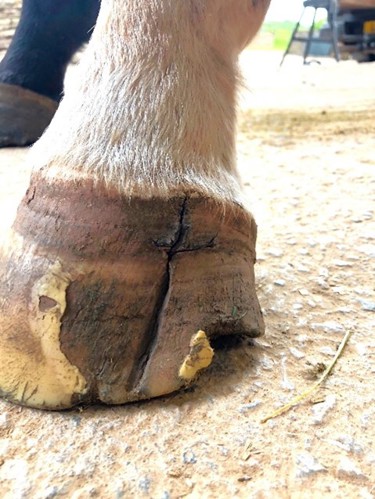
Hoof with a vertical crack. Credit: British Farrier & Blacksmith Association
Signs and symptoms
Visible splits in the hoof wall are the most obvious sign, and vertical cracks are the most common. Sometimes, the crack may widen when your horse puts weight on the hoof, which shows instability.
Lameness usually only occurs with deep or infected cracks. It’s important to check for heat in the hoof, swelling near the coronary band or any discharge, like pus or blood, as these can indicate infection.
Causes
Hoof cracks can happen due to extra stress on the hoof wall or poor balance. Common causes include:
- Hoof wall imbalance from poor trimming or shoeing
- Trauma to the coronary band
- Poor-quality hoof horn or nutritional deficiencies
- Infrequent farrier visits which leads to overgrown hooves.
Conformation issues like sheared heels can also make cracks more likely. Even horses with well-maintained hooves can sometimes develop cracks due to underlying structural stresses.
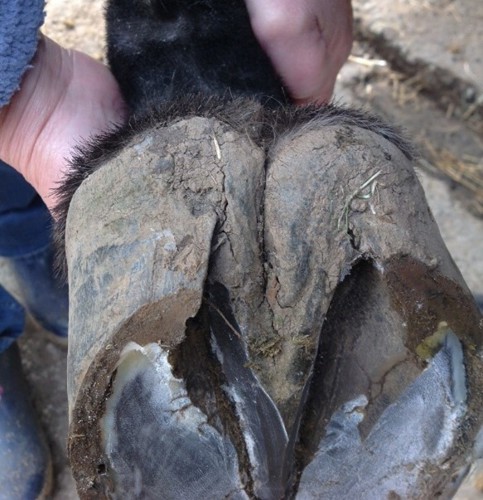
Hoof with a sheared heel. Credit: British Farrier & Blacksmith Association
Treatment
Not all cracks need treatment; shallow ones are often just cosmetic. If you spot a crack that reaches the coronary band or causes lameness, call your vet or farrier straight away. Early action prevents bigger problems and keeps your horse comfortable. It’s always better to be cautious and get professional advice rather than risk the crack worsening.
Stabilisation is key for deep cracks and can involve using special shoes, clips or patches to stop movement. Corrective farriery is also important, as trimming and balancing the hoof reduces stress on the cracked area.
If infection is present, cleaning out damaged tissue and applying antimicrobials is essential. However, don’t seal an infected crack as it can trap bacteria.
Supportive care, such as hoof boots or protective coverings, can help while the hoof grows out, which may take up to 12 months2.
Prevention
Good daily care goes a long way in preventing hoof cracks:
- Stick to a regular farrier schedule to keep hooves balanced and avoid overgrowth
- Feed a balanced diet to strengthen hoof quality
- Avoid extreme wet-to-dry changes and use hoof hardeners or moisturisers as needed
- Pick out hooves daily and check for small cracks, catching them early can make a big difference to keeping your horse’s feet healthy.
References
- Beasley, B (2024) Hoof Cracks in Horses - Musculoskeletal System - MSD Veterinary Manual
- Pollitt, C. C. (2015). The illustrated horse's foot: a comprehensive guide. Elsevier Health Sciences pg 229.