
EMS can affect any horse or pony, but it’s most commonly seen in those who are overweight1. A key aspect of EMS is insulin dysregulation, meaning affected horses are at a greater risk of laminitis and other complex disorders2. However, it’s treatable with a good weight management plan agreed in partnership with your vet
Advice specific for donkeys is available from The Donkey Sanctuary.
What is EMS in horses?
EMS is characterised by a combination of three key features:
- Insulin dysregulation
- Being overweight or regional abnormal fat deposits (known as adiposity)
- Increased risk of laminitis.
Signs of EMS in horses
The development of abnormal fat deposits (sometimes described as pockets/bulges/pads) usually seen around the crest, behind the shoulder, the hindquarters (especially at the tail head) and above the eyes, is one of the most common signs. However, some horses and ponies may still be suffering with insulin dysfunction even if they’re at a healthy weight3.
Other signs can include:
- Difficulty losing weight
- Recurring episodes of acute laminitis
- Increased drinking and urination
- Lethargy (lack of energy)
- Infertility in mares has been associated with EMS4.
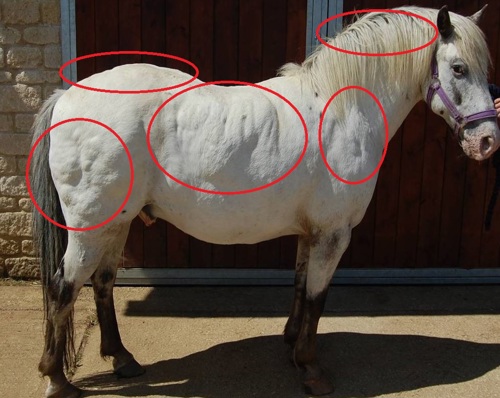
Photo credit: Blue Cross. Image shows pony with unusual fatty deposits across body.
The role of insulin
chevron-down
chevron-up
Insulin is an important hormone that’s needed to regulate glucose metabolism and blood sugar (glucose) levels. Glucose is taken from the bloodstream to be used as energy (for example, movement of muscles) or stored as fat.
However, for horses with EMS, problems occur when hormones produced by excessive fat cells affect the body’s ability to respond to insulin, leading to resistance and higher blood sugar levels. The body reacts to the high blood sugar levels by producing more insulin which ends up circulating in the horse’s bloodstream, known as hyperinsulinemia, but the body still doesn’t react to the increased levels.
It’s because of these hormonal changes that EMS is commonly linked to causing laminitis, although the exact mechanisms of how this happens aren’t yet fully understood2.
Diagnosis
chevron-down
chevron-up
Diagnosing and managing EMS is key to preventing chronic, recurrent laminitis.
If you suspect your horse is suffering from EMS, speak to your vet for advice as blood tests can be used to diagnose the disorder. Your vet will take blood samples to measure insulin and glucose levels in the bloodstream2. If high levels of both substances are detected, this is a clear sign of EMS.
Insulin levels can increase directly after travel4. If your horse has been transported to see a vet, you may need to wait before bloods are taken for testing.
Cushing's Disease
chevron-down
chevron-up
EMS can often be confused with Cushing’s Disease as both can lead to insulin resistance and laminitis. However, they have different causes and horses with Cushing’s can show additional symptoms.
Treatment
The good news is that EMS can be reversed, your vet will be able to advise on the best plan for your horse. The primary treatment for EMS is weight management1,2. This can be difficult as horses with EMS are often resistant to weight loss which can be upsetting for owners. Seeking support from professionals, friends or yard mates can help to maintain weight loss routines when they feel difficult. We know how hard it can be to manage a horse with a high fat score, and our Horse Care and Welfare helpline team are here to help.
Due to overweight horses being more likely to develop EMS, keeping your horse at a healthy weight is important to help decrease the risk.
You can use a weigh tape and get hands-on by fat scoring (also known as body condition scoring) to monitor your horse’s weight closely and react to any changes.
References
chevron-down
chevron-up
1. Morgan, R. Keen. et al., (2015) Equine Metabolic Syndrome. Veterinary Record. 177(7) pp. 173–179.
2. Durham, A, E. et al., (2019) ECEIM consensus statement on equine metabolic syndrome. Journal of Veterinary Internal Medicine. 33(2) pp. 335–349.
3. Knowles, E. J. et al., (2023) Factors associated with insulin responses to oral sugars in a mixed‐breed cohort of ponies. Equine Veterinary Journal.
4. Jacquay, E., et al., (2024) The impact of short‐term transportation stress on insulin and oral sugar responses in insulin dysregulated and non‐insulin dysregulated horses. Equine Veterinary Journal.
5. Keen, J. (2013) Equine Metabolic Syndrome/Insulin Resistance Syndrome in Horses. John Wiley & Sons, Ltd. Pp. 217–228.
6. Rendle, D. et al., (2018) Equine Obesity: current perspectives. UK Vet Equine 2(5).
7. Dosi, MCM. et al., (2020) Inducing weight loss in native ponies: is straw a viable alternative to hay? Veterinary Record 187, e60.