Worms in horses
Internal parasites are common but in large amounts can make your horse unwell. Dewormer drugs (known as anthelmintics) control worm populations but have, and are continuing to develop resistance to these chemicals. Traditional methods of giving a dewormer at regular intervals increases resistance and to help protect your horse’s health and their grazing pasture, this management method hasn’t been recommended for many years. To safeguard your horse’s health, these drugs need to be preserved so they remain effective. This can be achieved by using a risk-based approach to manage your horse and provide dewormers only when necessary.
The greatest benefits come when everyone on the yard works together, and a whole herd approach is now strongly recommended. Once resistance develops in a worm population it can’t be reversed, and pasture may become unsuitable for grazing horses.
While managing parasites in horses can seem like a daunting task, you’re not alone. Work closely with your prescriber (this could be your vet, pharmacist or Animal Medicines Advisors (SQP)), who is qualified to help you through the process. They’ll support you to make sure you have the right management, complete the appropriate tests and where applicable, are using the correct dewormer, at the right time to meet the needs of your horse and to keep them safe for years to come.
Risk-based worm control
Controlling ANTiparasitic resistance in Equines Responsibly (Canter) group works to help combat the threat of resistance. Guidelines for sustainable equine worm control move towards a risk-based approach.
Using the Canter table below to calculate your horse’s individual profile will help you identify possible areas to enhance your management and reduce your risk. There’s no stigma attached to having a horse that’s high risk, but it may mean their management needs to be a little different. Reducing your horse’s worm risk where possible will reduce the reliance on dewormer medication.
What’s your worm risk calculator has been created to help you assess your horse.
For risk-based worm control advice specific to donkeys visit The Donkey Sanctuary.

Resistance to dewormers
In the UK, there’s now resistance to each of the five classes of deworming drug, and no new alternatives are being developed. If this continues, we could face a future where treatments don’t work, putting equine welfare at serious risk. If worms become resistant to multiple drugs you may not be able to keep your horse healthy.
Resistance needs to be monitored and prevented from developing further so that dewormers remain effective. Dewormers must only be given when needed and where applicable you should retest afterwards to check they’ve been effective.
Testing for worms
Working with your prescriber to assess your horse over time, and using different tests will build their profile and give accurate information to prevent worm-related disease.
Below are some of the common tests used:
Faecal worm egg counts (FWEC)
chevron-down
chevron-up
FWEC estimate how many worm eggs your horse is passing onto the pasture in their droppings1. FWEC should be carried out three–four times per year between spring and autumn, and your prescriber will be best placed to advise on how regularly you should complete these. It’s a simple test that involves collecting a fresh sample from different faecal balls of your horse’s droppings, to send for assessment. The eggs are viewed and counted by microscope and results reported as the number of eggs per gram (epg). Your prescriber will advise if a treatment is needed and which dewormer to use.
Faecal worm egg count reduction test (FWECRT)
chevron-down
chevron-up
If treatment is advised following a FWEC, it’s important to check that the dewormer has been effective by completing a faecal worm egg count reduction test (FWECRT). This is a repeat FWEC 10–14 days after treatment, which checks that the dewormer has been effective in controlling the adult worm population. This is a vital step to detect if resistance is developing to the treatment you’ve used. Your prescriber will support you with this.
Tapeworm testing
chevron-down
chevron-up
FWEC aren’t reliable at detecting tapeworm eggs because they’re not shed evenly in your horse’s droppings. If your horse has tapeworm, they’ll produce antibodies to combat them. These antibodies can be measured by a saliva test kit, or your vet can complete a blood test. Tapeworm testing should be carried out twice a year, ideally in the spring and autumn. Your prescriber will discuss the results and advise if treatment is needed. There’s no need to retest after treatment for tapeworm as the antibodies will reduce slowly over time.
Encysted small redworm blood test
chevron-down
chevron-up
Most small redworm larvae burrow into the horse’s gut wall as part of their life cycle (known as ‘encysting’). This phase can vary in length and often larvae remain buried during the winter months to avoid the cold and wet weather. The larvae don’t produce any eggs and therefore FWEC often aren’t used during the winter. These larvae can gather in the gut lining in huge numbers and reduce the amount of nutrients your horse can absorb which can cause weight loss.
As the weather warms up during springtime, the larvae can emerge from the gut wall in large numbers. This mass emergence can cause huge amounts of damage and inflammation to your horse’s gut wall and can result in severe illness and even death.
There’s a blood test available that looks at antibodies against encysted redworm. It’s suitable for horses at low risk (see the Canter table above). Your prescriber will advise if a blood test is recommended or whether giving a winter dewormer is a more suitable option.
Other considerations
Deworming your horse
chevron-down
chevron-up
The video below shows how to safely administer a dewormer when required. It’s vital to provide the correct dosage as too little will contribute to resistance. It’s recommended to give a dewormer on a surface that can be easily cleaned such as a stable or concrete which prevents it being spread into the wider ecosystem.
While dewormers are safe medications, it’s best to give earlier in the day so you can monitor your horse in case they experience any gut health discomfort such as diarrhoea or colic. If you’ve any concerns, contact your vet.
Mares, foals and youngstock
chevron-down
chevron-up
Foals have lower immunity to worms which will develop as they age. You should consult your prescriber to assess your foal’s risk. Mares should also be well managed through a risk-based approach. Foals should be kept on pasture that has been rested from horses for as long as possible, and the use of the same paddocks for youngstock year-on-year isn’t recommended2. Speak to your prescriber about worm control if you're considering breeding from your mare.
Danger to the environment and other animals
chevron-down
chevron-up
Be aware that horse dewormers can make dogs very ill. Don’t let your dog eat any dewormer, play with syringes or eat droppings of a horse that has been treated with a dewormer for at least two weeks.
The drugs in dewormers will kill a range of invertebrates such as dung beetles and aquatic life. The chemicals can be active for many months after they’ve passed through your horse and can have a lasting effect on the environment. Thoroughly poo picking your fields daily after giving a treatment, and correct storage of the manure for a minimum of four months will prevent the drugs from the dewormer spreading to the wider environment3.
Managing and preventing worms for your horse
Thankfully, there are many steps you can take to reduce your horse’s risk of developing high worm burdens and reduce the need for a dewormer.
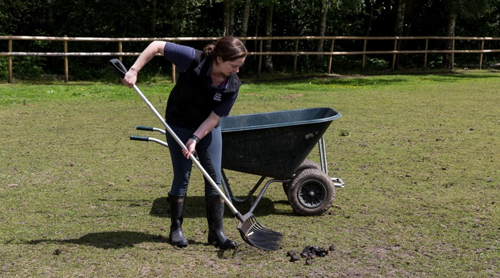
- Pick up droppings from your pasture regularly — twice weekly as a minimum. This removes the eggs from the pasture and therefore breaks the life cycle of the worms. Harrowing spreads worm larvae further across the pasture and increases the risk to your horses2.
- Work closely with your prescriber.
- All horses on the property follow a risk-based worm control programme.
- Don’t overstock your paddocks.
- Rotate paddocks and allow rest periods — pasture rested for several months will allow larvae to die.
- Quarantine new horses coming on to the yard — test and treat them upon arrival as advised by your prescriber. A FWECRT is beneficial, so you know if they’re bringing resistant worms onto your pasture and therefore you can put a suitable management plan in place.
- Graze foals and youngstock on pasture that’s been rested for ideally 12 months2.
- Cross graze with other species such as cows or sheep. They’ll ingest equine worm eggs as they graze, but the worms cannot survive in non-horse species, helping to lower contamination on pasture and break the life cycle.
- Plan your pasture management and keep detailed records.