
Polish your knowledge
Many equestrians use mirrors as a tool to help aid their progression. They can provide visual feedback, so riders can assess their position and their horse’s way of going.
Many options are available, as well as a range of installation techniques. Asking to see the product before purchasing, arranging a site visit before confirming your supplier and requesting to see a previous installation in your area will allow you to make an informed decision.
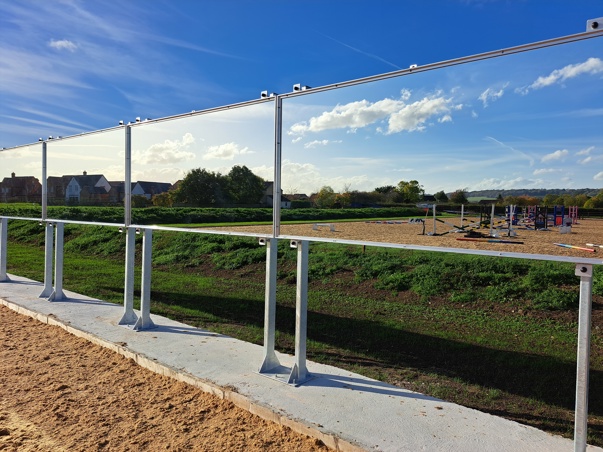
What to consider when viewing an installation
Talking to others about their choice of mirrors and riding in different layouts will help you decide what’s best for you. Check the reflection from 10, 20 and 30 metres to help you assess the quality.
Glass is supplied in different qualities and grades, so check the mirror is BS6206 and has a safety backing. This means that most of the glass will remain in place if the mirror breaks. The mirror should have an ‘impact shield’ behind it (foam cushion or other similar product) for added impact protection and a galvanised steel or aluminium sheet to hold the foam in place. We don’t recommend using wood to back the safety mirror glass.
Mirror thickness is also something to consider. The lower the grade, the more prone the glass is to breakage. A good supplier will be happy to discuss the construction of the internal framework, so don’t hesitate to ask.
Techniques for installation
There are many different installation techniques. A site visit prior to engineering will make sure the product is suitable for you and will highlight potential problems. To make sure the mirror and installation are covered in your suppliers’ terms and conditions, have them do the installation. Make sure to discuss an ongoing maintenance plan with any potential supplier.
Think about the material for the framework which will need to be securely anchored in place. Forged and galvanised steel is non-corrosive, making the stand, braces and connections highly durable and weatherproof. A timber framework can warp, twist and rot over time, leaving you with a distorted view and the mirrors susceptible to damage.
Top tips
• Don’t position mirrors inside the arena
• Don’t attach the mirrors to a fence
• Set the mirrors back from the kick boards or arena edge.
Training in your arena
Once your mirrors are installed, introduce your horse gradually and follow these steps to stay safe:
• Always wear industry-approved headgear and safety protection
• Ride a safe distance from the mirrors – increase distance further if your horse is young/nervous
• Consider your riding ability and the temperament of your horse
• Don’t let your horse touch the mirrors
• Don’t turn out a loose horse or lunge close to the units.
