The way people view horses in sport and leisure can vary widely. The world of horses is changing and our industry is under growing scrutiny from the wider public. Social License to Operate is a term you may or may not be familiar with, which describes the public's acceptance of a practice or activity. When applied to horse activities, we're all responsible for protecting our horses' future in society. BHS and British Equestrian Member Bodies adopt the phrase 'horses in society' which encompasses our aim to support social license by building acceptance and trust based on the value horses bring to people and communities.
As part of our commitment to the future of horses in society, we’re working hard to champion horse welfare and strengthen public trust in equestrian activities. This forms a key part of our 2025-2027 Strategic Plan.
As an equestrian professional, you play an important role. The way you speak, behave, and guide your clients has a big influence - not just on fellow equestrians, but also on people who may be new to the horse world. Your experience and leadership can help others understand how much we value and protect horses in society.
You’ll see these themes explored through our regional APC Development Days, and through free evening information sessions where we’ll look at how to approach sensitive or challenging conversations with confidence. Keep an eye on your APC e-news for updates.
National survey: Public attitudes towards UK equestrian sport industries
In December 2024, a group of UK equine organisations funded the largest study of its kind to understand how the public views horse welfare. The results are crucial in helping us develop a stronger, more trusted future for horses in sport and leisure.
From the findings, 14 actions were identified, all linked to the eight factors that help build trust and acceptance of horse sports. UK equine organisations have committed to working together to progress these actions.
You can read the full report here.
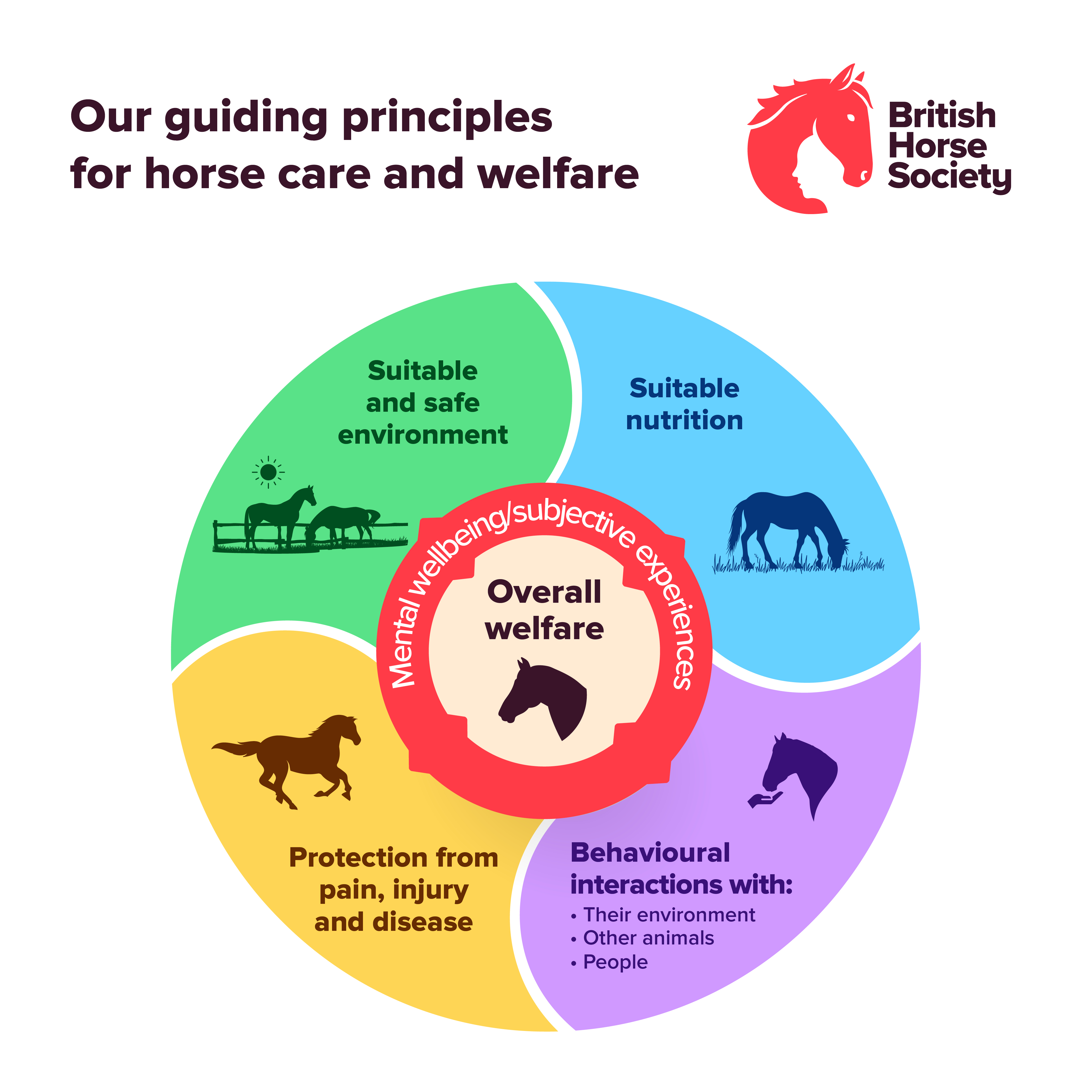
Our Guiding Principles
Good welfare and responsible equestrianism go hand in hand. Our aim is for all horses to enjoy a good life, supported by care, understanding, and evidence-based decisions.
Our Guiding Principles are based around the Five Domains Model (2020), and looks at the full range of horse welfare needs. We've interpreted the Five Domains Model into an equine-specific resource considering their physical, emotional and mental wellbeing.
Suitably Mounted

Weight can be a sensitive topic, but it’s important that riders consider the weight their horse can safely carry. This includes not only the rider but also tack and equipment. As coaches, you can help support riders to understand their responsibility and guide positive and reflective conversations on this topic.
A horse’s weight-carrying ability isn’t just about size. Age, conformation, fitness, muscle development, breed characteristics, and overall health all play a part. Every horse is an individual and should be assessed as one.
Our Welfare Team can provide additional support through Horse Health Days with access to our healthcare vehicle and weighbridge.
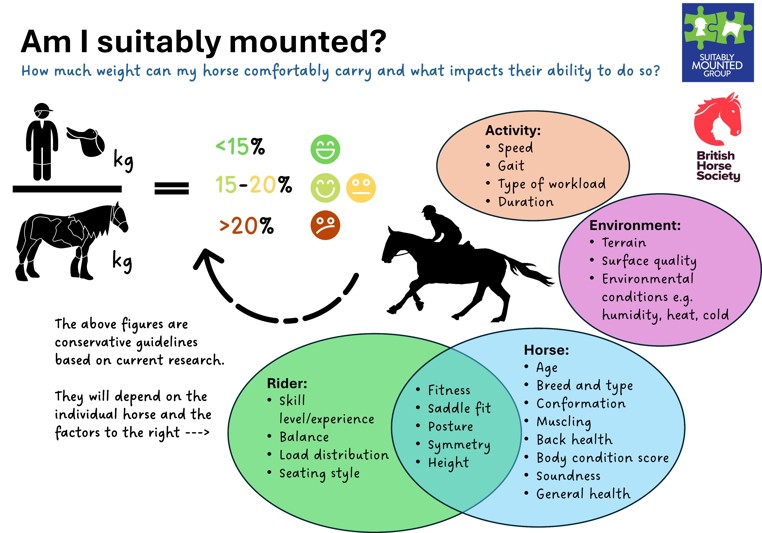
The below infographic can help to guide you or a rider to understand their horse’s weight carrying capability.
Language Guidance
The words we choose shape how others understand horses, and how we think about them ourselves. Language that supports empathy and connection helps promote better welfare and a stronger relationship between horses and people.
Below you’ll find examples of commonly used terms, why they may be unhelpful, and more positive alternatives. Scroll through each term to learn more about how to reframe the language we use and why it matters.
BHS will continue to use the term whip across our resources and qualifications. We believe the focus should be on educating riders about appropriate, responsible use, rather than changing the name of this training aid.